Casual vs Formal Suit – What Should You Choose?
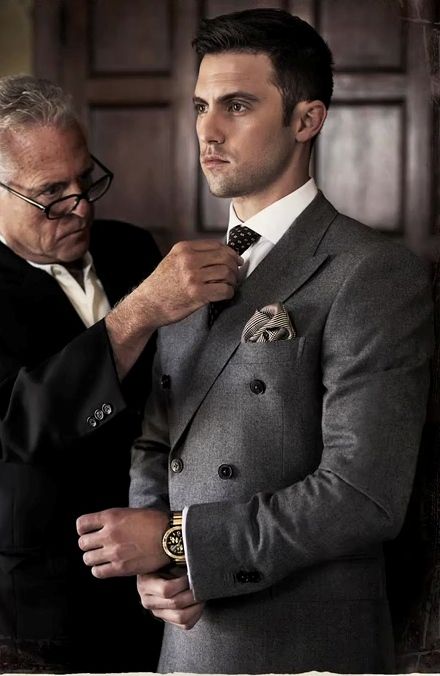
The modern gentleman’s wardrobe is no longer defined by rigid rules, yet the distinction between a casual and a formal suit remains one of the most critical style boundaries to master. Whether you are navigating the high-stakes boardrooms of Saigon's financial centers, attending a romantic destination wedding, or enjoying a weekend brunch at a rooftop lounge, your clothing speaks before you do.
As a dedicated tailor ho chi minh, we see clients every day facing this exact dilemma. Should you invest in a structured, classic silhouette, or opt for something relaxed, lightweight, and modern?
Finding the right balance requires more than just picking a color off a rack. It requires an understanding of tailoring architecture, fabric weights, and how a garment interacts with your lifestyle. Let’s break down the essential differences between casual and formal suits, helping you decide exactly what to bring to your next fitting.
The Anatomy of a Formal Suit: Timeless Elegance
A formal suit is built for impact. It is designed to create a sharp, commanding silhouette that projects authority, respect, and tradition. When you are looking for the best tailor for men, you are looking for an artisan who understands how to build structure that complements your natural posture.
1. Structure and Construction
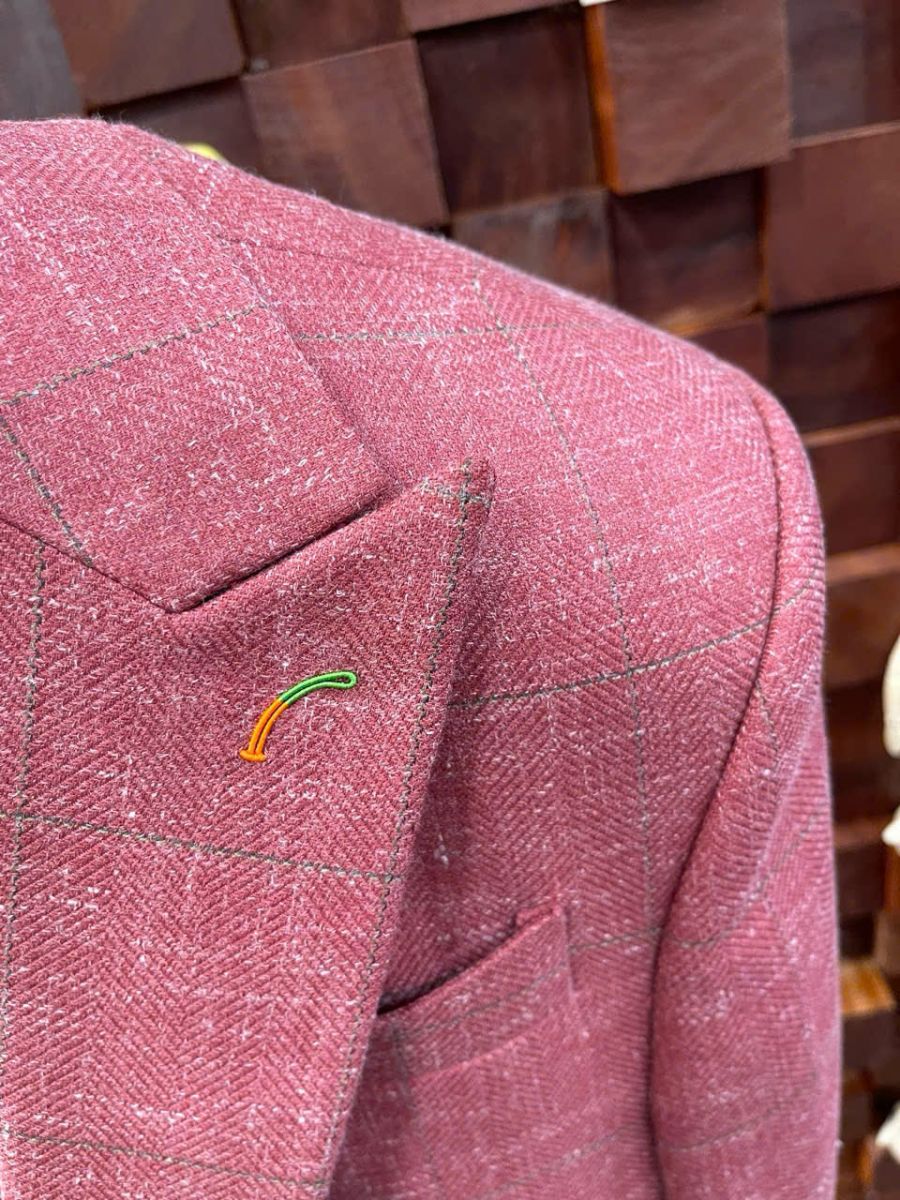
The hallmark of a formal suit is its internal architecture. True formal jackets utilize a full-canvas or half-canvas construction, where layers of horsehair and wool canvas are stitched between the fabric and the lining. This allows the suit to mold to your body over time while retaining a crisp, immaculate drape. The shoulders are typically padded, creating a strong, masculine V-taper.
2. Fabric Choice
Formal suits demand premium, high-twist wools that resist wrinkling and hold a clean press. For a truly world-class finish, we craft our formal garments using legendary cloths from Ermenegildo Zegna and Scabal. These fabrics offer an exquisite sheen, remarkable breathability, and a drape that synthetic alternatives simply cannot replicate.
3. Key Design Features
-
Lapels: Peak lapels or classic notch lapels with a clean, crisp edge. For black-tie events, shawl lapels dominate.
-
Pockets: Jetted pockets (where the pocket opening is a simple slit) or traditional flap pockets keep the lines streamlined.
-
Trousers: Clean fronts, often with a structural break over your dress shoes, featuring a traditional waistband without belt loops for a cleaner look.
When to Wear It
A formal suit is non-negotiable for high-profile business meetings, formal galas, and black-tie invitations. If you are preparing for your big day, commissioning a bespoke wedding suit ensures you look flawless standing at the altar.
The Modern Casual Suit: Effortless Sophistication
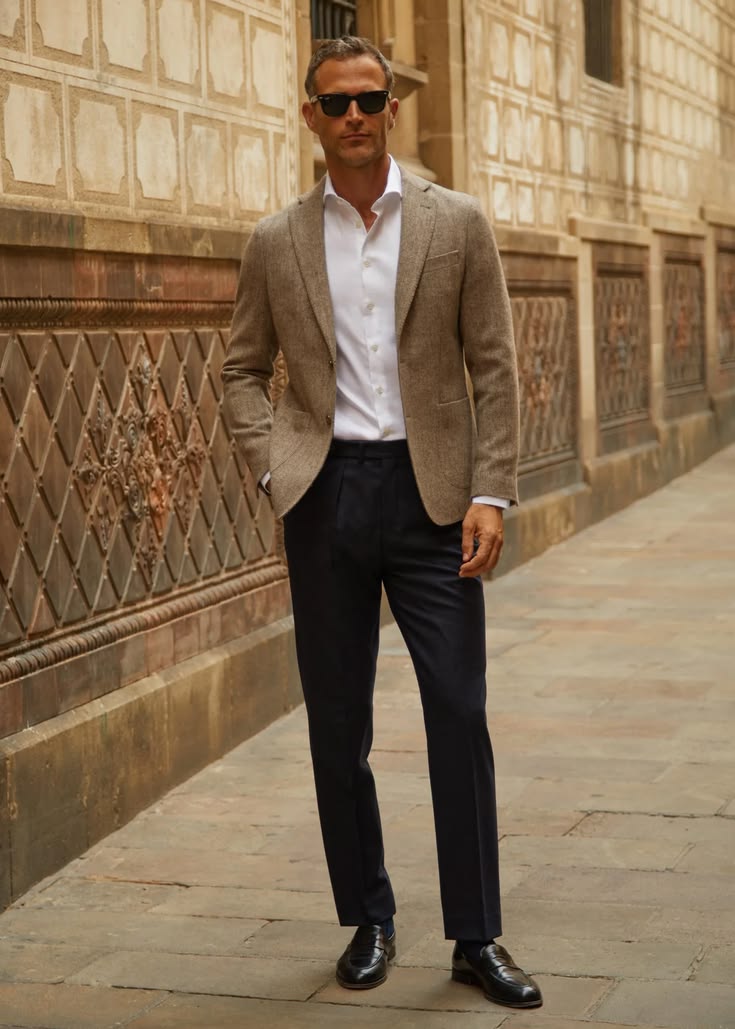
The casual suit is the antithesis of stiffness. It is designed for versatility, comfort, and a relaxed sense of confidence. It strips away the rigid constraints of traditional tailoring while maintaining the flattering lines that only a custom garment can provide. For those seeking a premier custom suit hcmc, a casual tailored suit is often the perfect answer to the city's vibrant, fast-paced lifestyle.
1. Deconstructed Architecture
Unlike its formal counterpart, a casual suit embraces a deconstructed or unlined approach. By removing the heavy shoulder padding and internal canvas layers, the jacket wears more like a lightweight shirt or a luxury cardigan. It follows the natural curve of your shoulders, offering maximum freedom of movement.
2. Embracing Texture and Pattern
While formal suits stick to solid navies, charcoals, and blacks, casual suits thrive on texture. Think breathable linens, soft cotton twills, and rustic wool-silk-linen blends. Utilizing world-class seasonal collections from houses like Loro Piana, a casual suit can look incredibly sophisticated without looking overly dressed up.
3. Key Design Features
-
Pockets: Patch pockets (where the pocket is stitched onto the outside of the jacket) instantly signal a relaxed, approachable vibe.
-
Details: Soft, unstructured lapels, contrast stitching, and horn or mother-of-pearl buttons.
-
Versatility: The jacket can easily be worn independently with premium denim, or the trousers can be paired with a simple linen shirt or high-quality knitwear.
When to Wear It
Perfect for smart-casual office environments, creative industry meetings, fine dining in District 1, or upscale social gatherings across Ho Chi Minh City.
Casual vs. Formal: The Master Tailor’s Breakdown
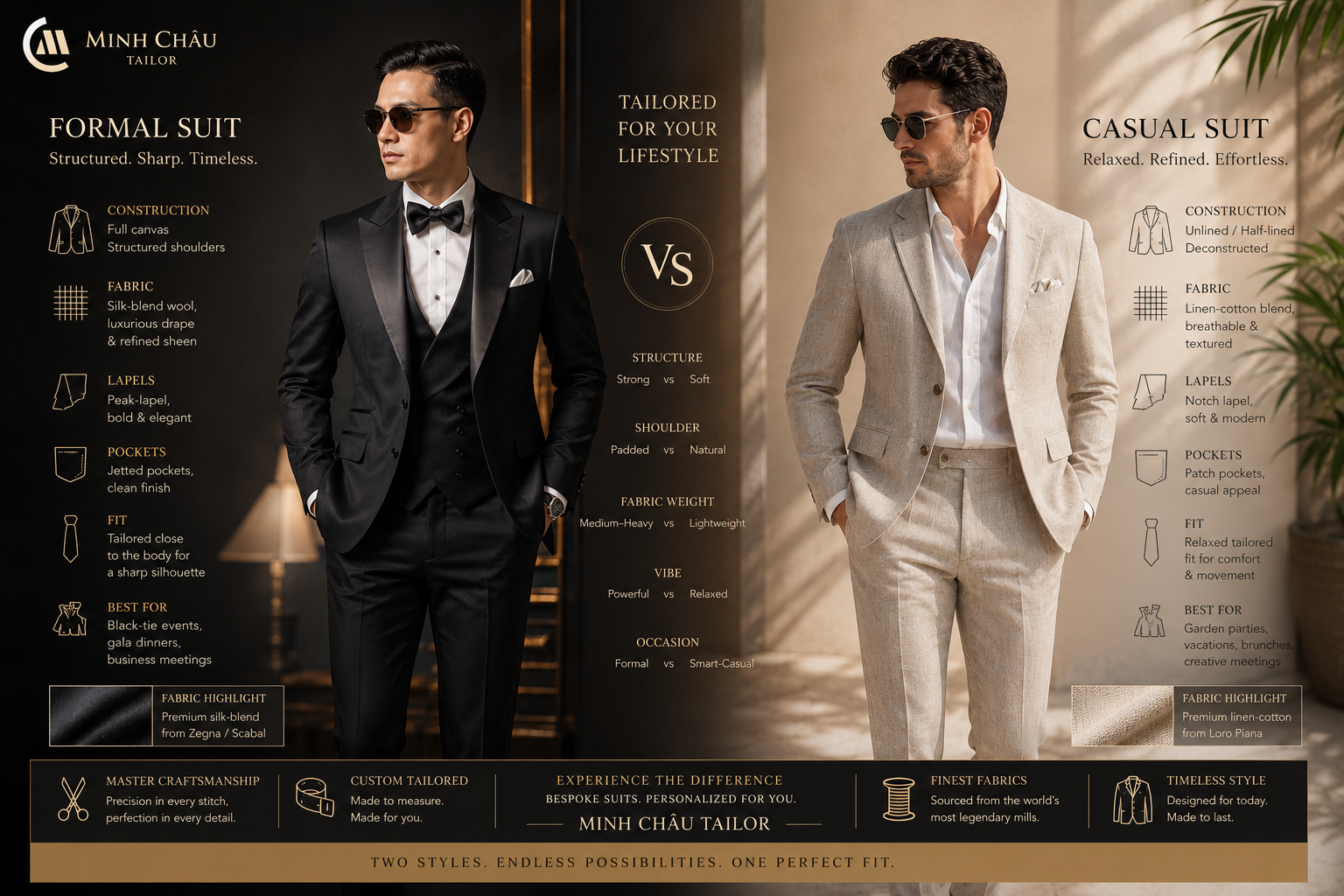
To truly appreciate the difference, we must look beyond the surface. As a master tailor hcmc, I view a suit not just as a piece of clothing, but as a balanced equation between fabric, structure, and climate.
Living and tailoring in Ho Chi Minh City presents a unique challenge: the tropical heat. This is where the choice between casual and formal construction becomes an art form.
| Feature | The Formal Suit | The Casual Suit |
| Primary Use | Custom business suit, Weddings, Galas | Smart-Casual, Travel, Creative Work |
| Internal Build | Full Canvas / Formally Padded | Unlined / Deconstructed / Natural Shoulder |
| Pocket Style | Jetted or Flap Pockets | Rounded Patch Pockets |
| Fabric Weight | 240g - 280g Worsted Wool | 180g - 230g Linen, Cotton, or Open-Weave Wool |
| Styling | Paired with Silk Ties & Dress Shoes | Paired with T-shirts, Loafers, or Clean Sneakers |
The Tailor’s Insight on Drape and Movement
When carving a formal pattern, we calculate millimeter precision to ensure that when you stand, there are zero pooling lines around your chest or lower back. It is a sculptural process.
Conversely, when cutting a casual suit, we intentionally introduce a fraction of ease in the armholes and across the back. Because the fabric (such as linen or open-weave cotton) is meant to move, wrinkle, and breathe naturally, the pattern must anticipate this organic behavior. A casual suit looks best when it has been lived in—it gains character through movement.
Navigating the HCMC Tailoring Scene: Quality & Costs
When looking for the best tailor hcmc, international travelers and local residents alike often ask the practical question: how much a suit in hcmc?
The tailoring market in Vietnam ranges from rapid, 24-hour tourist shops to world-class bespoke houses. The price of a custom suit is determined by two main factors: construction time and fabric provenance.
What Determines the Price?
A true bespoke suit requires a unique pattern drafted from scratch based on over 30 distinct body measurements. When you choose world-renowned fabric mills such as Dormeuil, you are paying for generations of weaving expertise, ethical sourcing, and unparalleled luxury performance.
Investing in a properly constructed suit from a reputable atelier ensures that the garment will survive the humid climate of Saigon, maintaining its structural integrity through years of dry cleaning and wear.
Why Choose Minh Chau Tailor?
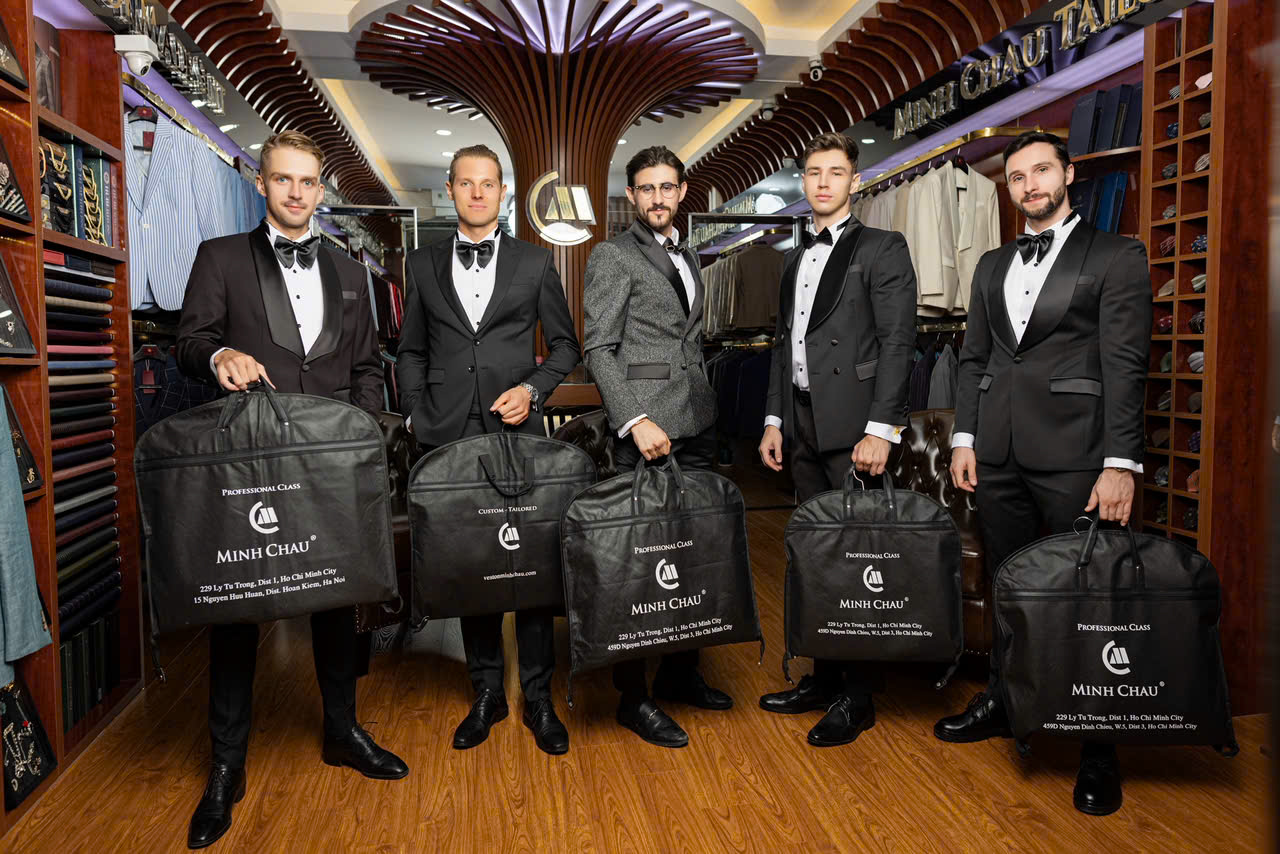
At Minh Chau Tailor, we do not believe in mass production. Located in the heart of Ho Chi Minh City, we combine time-honored European tailoring traditions with a deep understanding of modern lifestyle needs. Whether you need a commanding three-piece ensemble for an international boardroom or a breathable, unlined linen suit for a weekend getaway, we bring your vision to life with uncompromising precision.
Every garment that leaves our atelier is a testament to dedicated craftsmanship, hand-finished buttonholes, perfectly aligned patterns, and a fit that feels like a second skin.
Elevate Your Wardrobe Today
Ready to experience the difference of a true custom fit? Whether you are looking to command respect in a classic formal style or redefine casual elegance, your journey starts with a personalized consultation.
Let our master tailors guide you through our curated selection of the world's finest fabrics and design a silhouette tailored exclusively to your posture, style, and ambitions.


